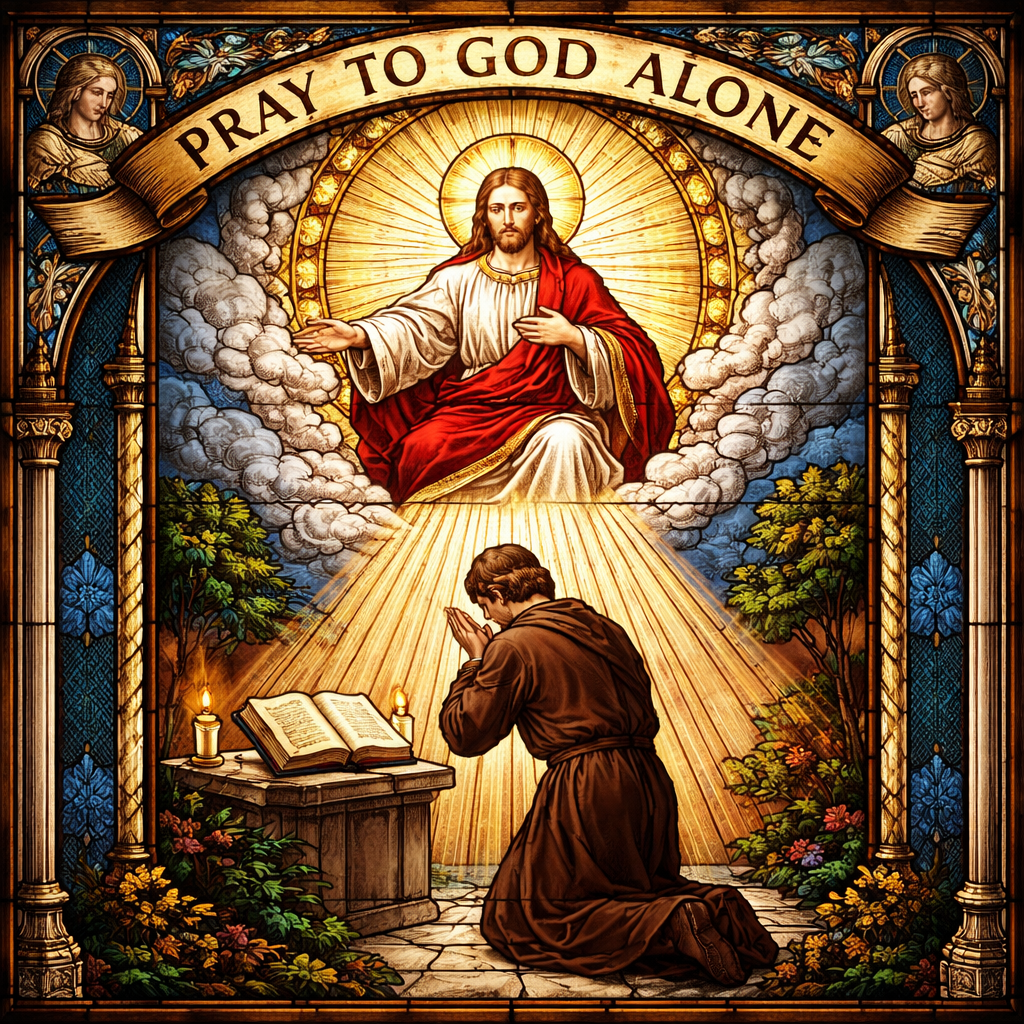
Prayer is a form of Worship. Prayer is not a neutral spiritual activity; it is an act of worship. For this reason, prayer must never be directed toward any created being. Scripture consistently binds prayer to the exclusive worship due to God alone. Jesus Himself establishes this boundary when He declares:
“You shall worship the Lord your God, and serve Him only.” (Matthew 4:10)
To pray is to render honor, trust, and dependence, acts that belong only to the Creator, never to the creature.
Prayer Requires Faith in the Living God.
Scripture directly ties prayer to faith. One cannot rightly call upon God unless one first believes that God is.
“How will they call on Him in whom they have not believed?” (Romans 10:14)
Prayer presupposes belief not only in God’s existence, but in His nearness, His authority, and His ability to act.
God Alone Knows the Human Heart.
Prayer assumes that the One addressed fully knows the inner life of the one praying. Scripture affirms that this knowledge belongs to God alone.
“You alone know the hearts of all the sons of men.” (1 Kings 8:39)
No created being, whether human, angelic, or glorified, possesses the divine capacity to search the heart or discern its true intentions.
God Alone Universally Hears Prayer.
Prayer also assumes that the One addressed can hear the cries of all people, in all places, at all times. Scripture attributes this ability exclusively to God.
“O You who hear prayer, To You all men come.” (Psalm 65:2 NAS)
To direct prayer elsewhere is to ascribe divine attributes to what is not divine.
Prayer Involves contrition and mercy.
True prayer includes an acknowledgment of sin and a plea for mercy. Yet only God can forgive sin in its eternal sense.
“Who is a God like You, who pardons iniquity?” (Micah 7:18)
“I, even I, am the one who wipes out your transgressions for My own sake, And I will not remember your sins.” (Isaiah 43:25 NAS)
Forgiveness is not merely relational or emotional, it is judicial and eternal, and therefore belongs to God alone.
God Alone Fulfills the Desires of His People.
Prayer rests upon the conviction that God both hears and responds according to His will and goodness.
“The LORD is near to all who call upon Him, To all who call upon Him in truth. He will fulfill the desire of those who fear Him; He will also hear their cry and will save them.” (Psalm 145:18–19 NAS)
God does not merely listen; He acts in faithfulness to His promises.
Prayer Comes Through Christ, the Word of God.
Prayer is directed to the Father through the Son. Jesus Christ is not a created intermediary, but the eternal Word of God who became flesh.
“In the beginning was the Word, and the Word was with God, and the Word was God… And the Word became flesh, and dwelt among us.” (John 1:1, 14 NAS)
As the living Word, Christ knows and judges the hearts of all people.
“For the word of God is living and active and sharper than any two-edged sword, and piercing as far as the division of soul and spirit, of both joints and marrow, and able to judge the thoughts and intentions of the heart.” (Heb 4:12 NAS)
We are to Pray in the Name of Christ.
To pray in the name of Christ means approaching God in obedience to Christ’s command and in confidence in what He has promised. Jesus Himself taught His disciples that prayer is to be offered to the Father through Him when He said,
“And whatever you ask in My name, that will I do, that the Father may be glorified in the Son. “If you ask Me anything in My name, I will do it.” (John 14:13-14 NAS)
“Until now you have asked for nothing in My name; ask, and you will receive, that your joy may be made full.” (Jonh 16:24 NAS)
Praying in Christ’s name does not mean merely adding the words “in Jesus’ name” at the end of a prayer. Rather, it means asking God for mercy for Christ’s sake, trusting not in our own worthiness, sincerity, or strength, but in Christ’s mediation on our behalf. When we pray this way, our encouragement, boldness, and hope of being heard do not come from ourselves, but from Christ alone. As Scripture teaches, we draw near to God with confidence because,
“We have a great high priest who has passed through the heavens, Jesus the Son of God”, and therefore we may “draw near with confidence to the throne of grace.” (Hebrews 4:14–16)
This kind of prayer seeks God’s favor not through outward words or empty profession, but through a heart that rests on Christ’s finished work, knowing that God receives prayers offered through His Son.
“These things I have written to you who believe in the name of the Son of God, in order that you may know that you have eternal life. And this is the confidence which we have before Him, that, if we ask anything according to His will, He hears us. And if we know that He hears us in whatever we ask, we know that we have the requests which we have asked from Him.” (1John 5:13-15 NAS)
Why Must We Pray in the Name of Christ?
We must pray in the name of Christ because sin has created a real and serious separation between humanity and God. Scripture declares that our iniquities have made a separation between us and Him.
“But your iniquities have made a separation between you and your God, And your sins have hidden His face from you, so that He does not hear.” (Isa 59:2 NAS)
Because of this distance, we cannot approach God on our own terms or by our own righteousness. For this reason, access to God requires a mediator, someone appointed and able to stand between God and sinful humanity. Scripture is explicit that no one in heaven or on earth is appointed or fit for this role except Jesus Christ alone. Jesus Himself declares,
“I am the way, and the truth, and the life; no one comes to the Father but through Me.” (John 14:6)
Likewise, Scripture affirms that,
“There is one God, and one mediator also between God and men, the man Christ Jesus.” (1 Timothy 2:5)
“Through Christ, believers are given bold and confident access to God, not because of their own merit, but because Christ lives forever to intercede for them. Hence, also, He is able to save forever those who draw near to God through Him, since He always lives to make intercession for them. For it was fitting that we should have such a high priest, holy, innocent, undefiled, separated from sinners and exalted above the heavens.” (Heb 7:25-26 NAS)
Therefore, all prayer, worship, and thanksgiving are to be offered to God in Christ’s name alone, as those who have been brought near through Him and through no other.
“And whatever you do in word or deed, do all in the name of the Lord Jesus, giving thanks through Him to God the Father.” (Col 3:17 NAS)
Christ Alone Is Mediator and Advocate.
Scripture is explicit: there is no mediator between God and humanity except Jesus Christ.
“If anyone sins, we have an Advocate with the Father, Jesus Christ the righteous.” (1 John 2:1 NAS)
“For there is one God, and one mediator also between God and men, the man Christ Jesus.” (1 Timothy 2:5 NAS)
Prayer does not pass through saints, angels, or any other intercessor. It comes to the Father through Christ alone.
We are to ask the Father in Christ’s Name.
Jesus instructs His disciples to pray to the Father in His name:
“Whatever you ask the Father in My name, He will give you.” (John 16:23)
This is not a promise of arbitrary wish-fulfillment. Rather, it reflects the believer’s restored access to the Father through Christ’s completed work, an access that shapes prayer according to truth, understanding, and union with God’s will.
Prayer Is Enabled by the Holy Spirit.
Because fallen humanity does not naturally understand God’s will, prayer must be enabled by the Holy Spirit.
“A natural man does not accept the things of the Spirit of God.” (1 Corinthians 2:14 NAS)
The Spirit teaches, reminds, and guides God’s people in truth.
“The Helper, the Holy Spirit… will teach you all things.” (John 14:26 NAS)
Even the act of prayer itself requires divine help.
“The Spirit helps our weakness; for we do not know how to pray as we should.” (Romans 8:26)
Therefore, believers are commanded to pray continually in dependence upon the Spirit.
“With all prayer and petition pray at all times in the Spirit.” (Ephesians 6:18 NAS)
Prayer, as taught by Christ and revealed throughout Scripture, is neither a vague spiritual exercise nor a human-centered practice. It is worship, holy, deliberate, and Godward. Because prayer involves faith, trust, hope, and dependence, it can only be directed to the One who alone possesses the divine attributes necessary to receive it: the living God. To pray elsewhere is to misplace worship and to ascribe to creatures what belongs to the Creator alone.
Yet God has not left sinful humanity without access to Himself. Prayer is made possible because the Father has provided a perfect Mediator in His Son, Jesus Christ. Through Christ’s finished work, believers are given bold and confident access to the throne of grace, not on the basis of their own righteousness, but on His. Prayer is offered to the Father, through the Son, and empowered by the Holy Spirit, who teaches, guides, and intercedes when words fail.
Therefore, to pray rightly is to pray to God alone, in the name of Christ alone, by the help of the Spirit alone. This is not merely a rule for prayer, but a confession of the gospel itself. Any prayer that departs from this pattern does not merely err in form, it obscures the glory of God, the sufficiency of Christ, and the work of the Spirit. True prayer, rightly ordered, is worship restored, access granted, and communion made possible by God Himself.