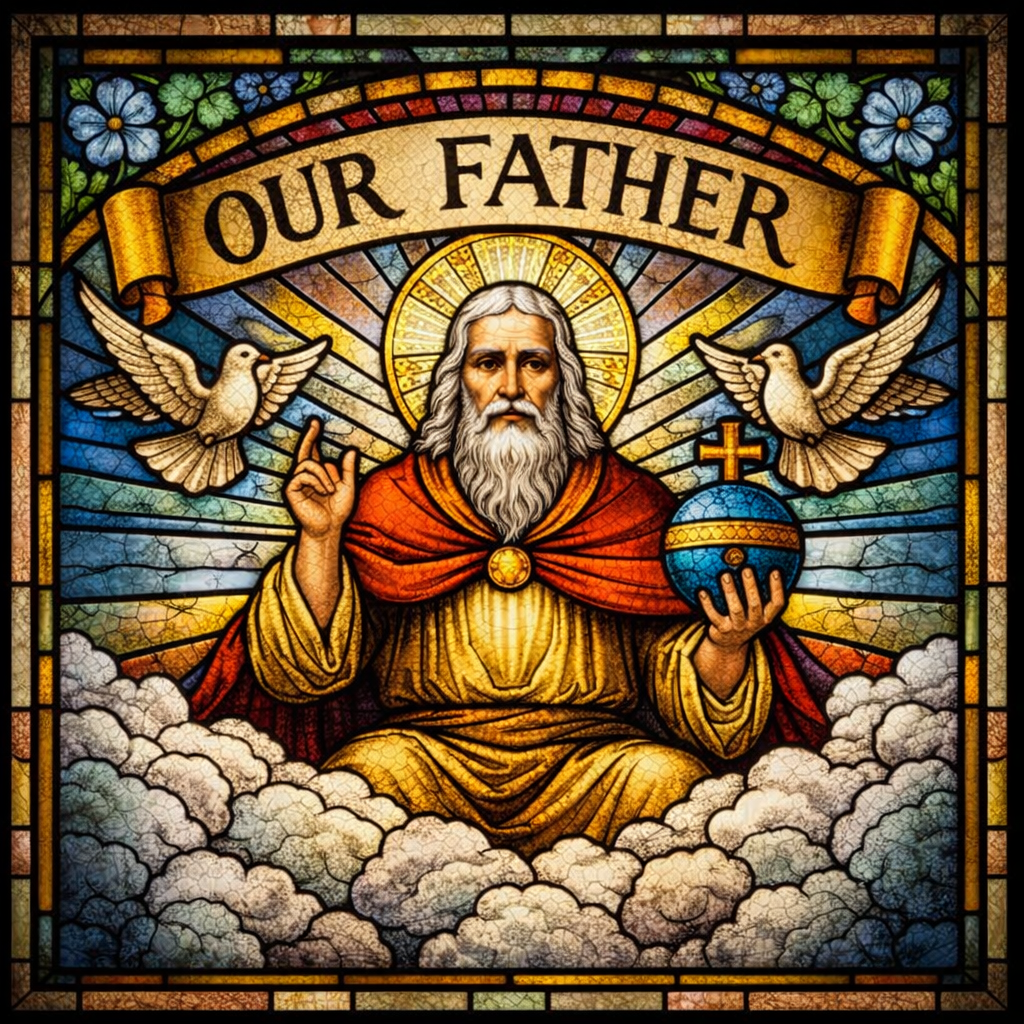
The Lord’s Prayer is the framework Christ gave us to have a meaningful prayer relationship with God.
Prayer requires humility.
Prayer is not a display of religious pride, but a humble appeal for mercy before a holy God.
“Two men went up into the temple to pray, one a Pharisee, and the other a tax-gatherer. The Pharisee stood and was praying thus to himself, God, I thank Thee that I am not like other people: swindlers, unjust, adulterers, or even like this tax-gatherer. I fast twice a week; I pay tithes of all that I get. But the tax-gatherer, standing some distance away, was even unwilling to lift up his eyes to heaven, but was beating his breast, saying, God, be merciful to me, the sinner! I tell you, this man went down to his house justified rather than the other; for everyone who exalts himself shall be humbled, but he who humbles himself shall be exalted.’” (Luke 18:10-14 NAS)
The Pharisee trusted in his own righteousness, while the tax-gatherer approached God with humility and repentance. The lesson is clear: true prayer begins with humility before God.
Christ gives us the Lord’s Prayer as the model prayer.
The Lord’s Prayer is recorded in two places in Scripture: Matthew 6:9–13 and Luke 11:2–4.
“Pray, then, in this way: ‘Our Father who art in heaven, Hallowed be Thy name. ‘Thy kingdom come. Thy will be done, On earth as it is in heaven. ‘Give us this day our daily bread. ‘And forgive us our debts, as we also have forgiven our debtors. ‘And do not lead us into temptation, but deliver us from evil. For Thine is the kingdom, and the power, and the glory, forever. Amen.’” (Matt 6:9-13 NAS)
Luke records the same instruction in a different setting.
“And he said unto them, When ye pray, say, Father, Hallowed be thy name. Thy kingdom come. Give us day by day our daily bread. And forgive us our sins; for we ourselves also forgive every one that is indebted to us. And bring us not into temptation.” (Luke 11:2-4 ASV)
Both passages present the same model prayer. Together they confirm that Jesus intended to give His disciples a clear and enduring pattern for approaching God.
The introduction to this prayer is found in the opening words:
“Pray, then, in this way: ‘Our Father who art in heaven’” (Matt 6:9 NAS)
The words “Our Father” reveal who God is and how believers come to Him in prayer. With these words Christ establishes the guiding principle of Christian prayer. When He says, “Pray, then, in this way,” He is not merely giving a sentence to repeat, but a pattern to follow.
This does not mean we are bound to repeat these exact words every time we pray. Rather, Christ teaches us what prayer should contain and what spirit should govern it. Though brief in form, it contains a complete summary of what believers should seek from God.
When we shape our prayers according to this pattern, two important benefits follow. First, it guards us from error in prayer. Second, it directs us to ask for the very things God has promised to give.
“If we ask anything according to His will, He hears us.” (1 John 5:14)
Scripture assures us that God hears the prayers that are offered according to His will.
The Lord’s Prayer directs our attention toward God the Father.
God the Father alone is the proper object of prayer. The Lord’s Prayer contains no appeals to saints or angels. It begins with God Himself.
God is our Father because He created all things.
All life comes from Him.
“Do we not all have one father? Has not one God created us? Why do we deal treacherously each against his brother so as to profane the covenant of our fathers?” (Mal 2:10 NAS)
Our existence, movement, and life all come from God and therefore belong to Him as His creatures.
“For in Him we live and move and exist, as even some of your own poets have said, ‘For we also are His offspring.’ “Being then the offspring of God, we ought not to think that the Divine Nature is like gold or silver or stone, an image formed by the art and thought of man.” (Acts 17:28-29 NAS)
God’s fatherly authority is not limited merely to the act of creation.
God the Father rules all things.
The One who created all things also continually governs and rules over what He has made. Scripture therefore describes God not only as Creator, but also as the sovereign ruler who exercises authority over the entire universe.
“The LORD has established His throne in the heavens; And His sovereignty rules over all.” (Psa 103:19 NAS)
He alone determines the course of history, declares the end from the beginning, and accomplishes every purpose He has decreed. Nothing in heaven or on earth can overturn His will.
“Remember the former things long past, For I am God, and there is no other; I am God, and there is no one like Me, Declaring the end from the beginning And from ancient times things which have not been done, Saying, ‘My purpose will be established, And I will accomplish all My good pleasure’” (Isa 46:9-10 NAS)
No creature in heaven or on earth can resist His will, and no one can challenge His authority over creation.
“And all the inhabitants of the earth are accounted as nothing, But He does according to His will in the host of heaven And among the inhabitants of earth; And no one can ward off His hand Or say to Him, ‘What hast Thou done?’” (Dan 4:35 NAS)
God is the only one who can save us.
God is called Father because He alone has the authority to show mercy to sinners.
“I, even I, am the LORD; And there is no savior besides Me.” (Isa 43:11 NAS)
Humanity, fallen in sin, cannot save itself. Forgiveness and reconciliation must come from God Himself, whose mercy provides the only hope for those who sit in spiritual darkness.
“And you, child, will be called the prophet of the Most High; For you will go on before the Lord to prepare His ways; To give to His people the knowledge of salvation By the forgiveness of their sins, Because of the tender mercy of our God, With which the Sunrise from on high shall visit us, To shine upon those who sit in darkness and the shadow of death, To guide our feet into the way of peace.” (Luke 1:76-79 NAS)
Because God is merciful, Scripture invites sinners to approach Him with confidence. The mercy He offers is not distant or unreachable, but is extended to those who draw near to Him through Christ.
“Let us therefore draw near with confidence to the throne of grace, that we may receive mercy and may find grace to help in time of need.” (Heb 4:16 NAS)
Yet this mercy does not originate from human effort or human merit. It flows entirely from God’s sovereign will. Scripture teaches that God Himself determines when and to whom He will show mercy.
“For He says to Moses, ‘I will have mercy on whom I have mercy, and I will have compassion on whom I have compassion.’” (Rom 9:15 NAS)
We are to pray to the Father because He is the one who shows mercy.
Believers become children of God through adoption and regeneration.
God is the Father of the children of God through adoption. While God is the Creator of all people, only those who are brought into His family through Christ are called His sons by adoption.
We are children of God by adoption.
This adoption is not based on human merit, but on God’s gracious purpose accomplished through Jesus Christ.
“Grace to you and peace from God our Father and the Lord Jesus Christ. Blessed be the God and Father of our Lord Jesus Christ, who has blessed us with every spiritual blessing in the heavenly places in Christ, just as He chose us in Him before the foundation of the world, that we should be holy and blameless before Him. In love He predestined us to adoption as sons through Jesus Christ to Himself, according to the kind intention of His will, to the praise of the glory of His grace, which He freely bestowed on us in the Beloved.” (Eph 1:2-6 NAS)
Through this saving work, believers are not merely forgiven but welcomed into God’s household. The Spirit of God gives believers the assurance of this relationship, enabling them to approach God with the intimacy and confidence of children calling upon their Father.
“For you have not received a spirit of slavery leading to fear again, but you have received a spirit of adoption as sons by which we cry out, ‘Abba! Father!’” (Rom 8:15 NAS)
This relationship also carries with it the loving discipline of a Father toward His children. Just as earthly fathers correct their sons for their good, God disciplines those whom He has received into His family. His discipline therefore serves as evidence of true sonship and of His fatherly care for His people.
“For those whom the Lord loves He disciplines, And He scourges every son whom He receives.” It is for discipline that you endure; God deals with you as with sons; for what son is there whom his father does not discipline?” (Heb 12:6-7 NAS)
God the Father regenerates His people through His Holy Spirit.
Scripture further teaches that those who belong to God are not only adopted into His family but also transformed by the regenerating work of the Holy Spirit. This work of regeneration is the spiritual renewal by which God gives new life to sinners and sets them apart as His people.
“He saved us, not on the basis of deeds which we have done in righteousness, but according to His mercy, by the washing of regeneration and renewing by the Holy Spirit, whom He poured out upon us richly through Jesus Christ our Savior, that being justified by His grace we might be made heirs according to the hope of eternal life.” (Tit 3:5-7 NAS)
This new birth also brings with it a living hope. Through the resurrection of Jesus Christ, God causes His people to be born again so that they may look forward to the inheritance He has prepared for them.
“Blessed be the God and Father of our Lord Jesus Christ, who according to His great mercy has caused us to be born again to a living hope through the resurrection of Jesus Christ from the dead.” (1Pet 1:3 NAS)
Those whom God causes to be born again are not left to themselves, but are kept and preserved by the power of the Father.
“My Father, who has given them to Me, is greater than all; and no one is able to snatch them out of the Father’s hand.” (John 10:29 NAS)
God’s people approach God the Father through faith.
When believers pray to God as Father, they do so through faith in Jesus Christ. Christ unites believers to Himself and brings them into the family of God.
“You are all the children of God by faith in Christ Jesus.” (Gal 3:26)
This privilege of being called the children of God flows from the great love that the Father has shown toward those who belong to Christ.
“See how great a love the Father has bestowed upon us, that we should be called children of God; and such we are. For this reason, the world does not know us, because it did not know Him.” (1John 3:1 NAS)
By redeeming those who were under the law, Christ brings believers into the status of sons, and the Spirit of God confirms this relationship within the hearts of His people. Through the Spirit, believers approach God with the confidence and intimacy of children calling upon their Father.
“In order that He might redeem those who were under the Law, that we might receive the adoption as sons. And because you are sons, God has sent forth the Spirit of His Son into our hearts, crying, “Abba! Father!” Therefore you are no longer a slave, but a son; and if a son, then an heir through God.” (Gal 4:5-7 NAS)
This is why we begin with the words, “Our Father.” This address reveals both the character of God and the relationship believers have with Him. Christ gives the Lord’s Prayer as the model by which all prayer should be shaped. God is rightly called Father because He is the Creator and sovereign governor of all things, from whom all life comes and under whose authority the entire universe exists. Yet God is also called Father in a greater sense because He alone shows mercy to sinners and provides salvation through His gracious purpose. Through the redeeming work of Jesus Christ, believers are brought into the family of God and become His children by adoption. This relationship is confirmed inwardly through the regenerating work of the Holy Spirit, who gives new life and produces righteousness in those who are born of God. Therefore, believers approach God as Father through faith in Christ, relying not on their own righteousness but on the saving work of the Son and the witness of the Spirit. In this way the words “Our Father” express the full gospel reality that the sovereign Creator who rules all things has, through mercy and grace, brought redeemed sinners into His household so that they may confidently draw near to Him in prayer.